
Article: Activated Charcoal in Candles: What It Is—and What It Isn’t
Activated Charcoal in Candles: What It Is—and What It Isn’t
What Is Activated Charcoal?
Activated charcoal, also called activated carbon, is a specially processed form of carbon with a highly porous structure and an unusually large surface area.
That structure allows certain molecules to attach to the surface of the carbon through a process called adsorption.
This is different from absorption.
When something is absorbed, it is taken into the material itself. When something is adsorbed, molecules collect on the material’s surface.
That distinction is important because activated charcoal is widely used as an adsorbent in applications such as water treatment, industrial filtration, air-cleaning systems, and certain odor-control products.
Does Activated Charcoal Really Remove Odors?
Activated charcoal can help capture certain odor-causing molecules, gases, and volatile compounds under the right conditions.
Its effectiveness depends heavily on how it is being used.
Important factors include:
- The amount of activated carbon present
- The amount of surface area exposed
- The specific substance being targeted
- How much air or liquid comes into contact with the carbon
- Humidity and temperature
- How long the carbon has been in use
- Whether the carbon has become saturated
This is why activated carbon can perform very differently in a large filtration system than it does when incorporated into another product.
What Types of Odors Can Activated Charcoal Help With?
Activated carbon is commonly used in filtration systems designed to capture certain gases and odor-causing compounds.
Depending on the application, it may be used to help reduce odors associated with things like:
- Cooking
- Smoke
- Pets
- Certain household chemicals
- Musty environments
- Organic compounds in the air
However, activated carbon does not remove every odor equally, and it does not replace proper cleaning, ventilation, or removal of the odor source.
For example, if an odor is being caused by spoiled food, pet waste, mold, or smoke residue, the underlying source still needs to be addressed.
How Does Activated Charcoal Work?
Activated charcoal works because of its enormous internal surface area.
During processing, the carbon develops a network of tiny pores. These pores provide places where certain molecules can attach to the surface.
The more exposed carbon surface there is, the more opportunity there is for adsorption to occur.
This is one reason activated carbon performs especially well in filters where air or water is intentionally passed across a large amount of exposed carbon.
Does Activated Charcoal Absorb or Adsorb Odors?
The technically correct word is adsorb.
Activated charcoal does not primarily soak odors up like a sponge.
Instead, certain odor-causing molecules adhere to the surface of the charcoal.
So when discussing activated carbon, adsorbent is more accurate than absorbent.
Is Activated Charcoal the Same as an Air Purifier?
No.
Activated carbon is commonly used as one component inside certain air-cleaning systems, but activated charcoal by itself is not automatically an air purifier.
A true activated-carbon air filter is generally designed so that air flows across a substantial amount of exposed carbon.
That airflow and exposed surface area are important to how the carbon performs.
Can Activated Charcoal Remove Pet Odors?
Activated carbon is frequently used in odor-control products and filtration systems that target pet-related smells.
However, it is important to distinguish between capturing some airborne odor molecules and actually removing the source of the odor.
For pet odors, the most effective approach is still:
- Remove the source.
- Clean the affected surface.
- Ventilate the space.
- Use filtration or odor-control products if needed.
Activated carbon can be part of an odor-management strategy, but it should not be viewed as a replacement for cleaning.
Does Activated Charcoal Remove Smoke Odors?
Activated-carbon filters can help capture certain gaseous compounds associated with smoke.
However, smoke odor can also settle into fabrics, walls, furniture, and other porous surfaces.
That means activated carbon alone may not fully remove a persistent smoke smell.
Source removal and cleaning are still important.
How Long Does Activated Charcoal Work?
Activated charcoal does not work indefinitely.
Over time, its surface becomes occupied by adsorbed molecules and its effectiveness decreases.
In filtration products, activated carbon therefore needs to be replaced periodically.
The useful life depends on:
- How much carbon is present
- How contaminated the air or water is
- Humidity
- Airflow
- The types of molecules being captured
There is no single universal replacement schedule that applies to every activated-carbon product.
Why CharGlow Uses Activated Charcoal
Activated charcoal inspired the original CharGlow concept.
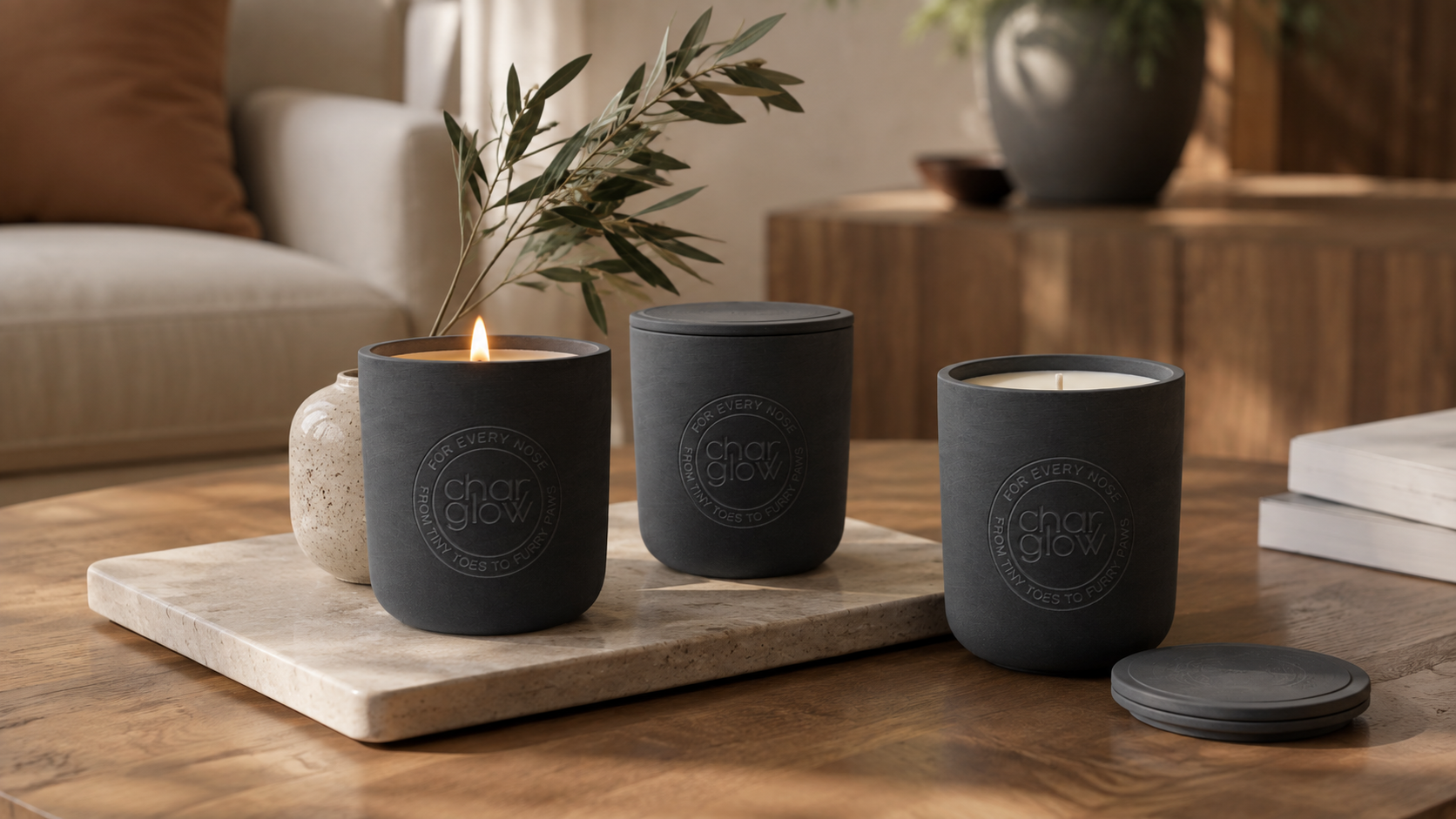
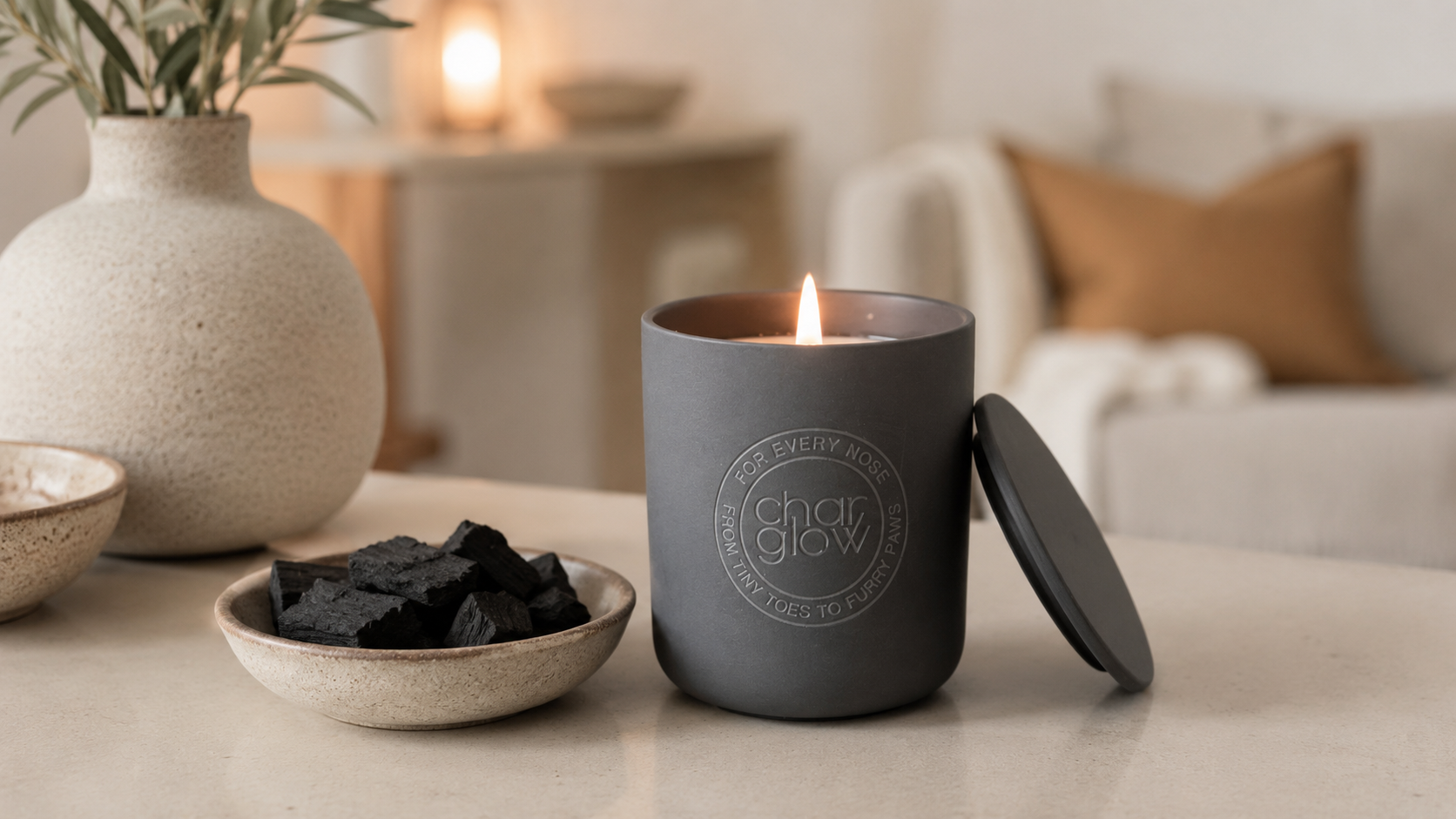
It is incorporated into our Signature Collection along with soy wax and essential oils.
The charcoal gives the original formula its distinctive identity and contributes to the dark visual character associated with CharGlow.
It remains an important part of our brand story and differentiates Signature from our more fragrance-forward Escape Collection.
A Charcoal Candle Is Not an Air Filter
This distinction is important.
Activated-carbon air-cleaning systems are specifically designed to move air across a substantial quantity of exposed carbon.
A candle containing activated charcoal dispersed within solid wax does not have the same structure, surface exposure, or forced airflow.
For that reason, a charcoal-infused candle should not be described as equivalent to:
- An activated-carbon air filter
- An air purifier
- A ventilation system
- A professional odor-remediation product
Does a CharGlow Candle Eliminate Odors?
CharGlow does not represent Signature candles as a substitute for cleaning, ventilation, filtration, source removal, or professional odor remediation.
We have not conducted independent finished-product testing demonstrating that a CharGlow candle measurably eliminates room odors or purifies indoor air.
Instead, the Signature Collection is designed around:
- A lightly scented essential-oil fragrance profile
- Our distinctive activated-charcoal formula
- A subtle fragrance experience
- A reusable ceramic vessel
- The atmosphere created by a burning candle
Signature and Escape Are Different
CharGlow currently offers two distinct candle experiences.
The Signature Collection combines soy wax, essential oils, activated charcoal, and a cotton wick. It is intentionally more subtle in fragrance.
The Escape Collection uses soy wax and fragrance oils to create a richer, more expressive scent experience.
Escape candles do not contain activated charcoal unless an individual product description specifically states otherwise.
Which CharGlow Collection Is Right for You?
Choose Signature if you prefer:
- A softer fragrance presence
- Essential-oil scent profiles
- The distinctive charcoal-inspired CharGlow concept
- A subtle candle experience
- A dark ceramic vessel
Choose Escape if you prefer:
- Stronger fragrance projection
- More complex scent blends
- Seasonal and destination-inspired fragrances
- A more noticeable room-filling scent experience
The Bottom Line
Activated charcoal is a fascinating material with well-established uses in filtration and adsorption.
It can help capture certain odor-causing molecules when used under the right conditions, particularly in systems designed to maximize contact between air and exposed carbon.
But a charcoal-infused candle is not the same thing as an activated-carbon filter.
At CharGlow, activated charcoal remains part of the story and identity of our Signature Collection — not a substitute for proper odor remediation.
That distinction allows us to be transparent about what the material can do while still celebrating the concept that inspired CharGlow.
FAQs
Does activated charcoal really remove odors?
Activated carbon can adsorb certain odor-causing molecules, but effectiveness depends on the amount of carbon, surface exposure, airflow, humidity, and the type of odor involved.
Is activated charcoal absorbent or adsorbent?
Adsorbent is the more accurate term. Molecules attach to the surface of activated charcoal rather than being absorbed into it.
Can activated charcoal help with pet smells?
Activated carbon can be used as part of an odor-control strategy, but it does not replace cleaning or removal of the odor source.
Can activated charcoal remove smoke odors?
It may help capture some gaseous compounds associated with smoke, but smoke residue on surfaces may require cleaning and other remediation.
Is a charcoal candle an air purifier?
No. A charcoal candle should not be considered equivalent to an activated-carbon air filter or air purifier.