
Candle Safety Around Children and Pets
Start with the Physical Risks
The most important risks associated with any candle are the open flame, hot wax, a heated vessel, nearby flammable materials, and the possibility of the candle being knocked over.
Fragrance choice does not replace proper candle safety.
Whether a candle is lightly scented or fragrance-forward, it should always be treated as a source of heat and flame.
Choose a Stable, Secure Location
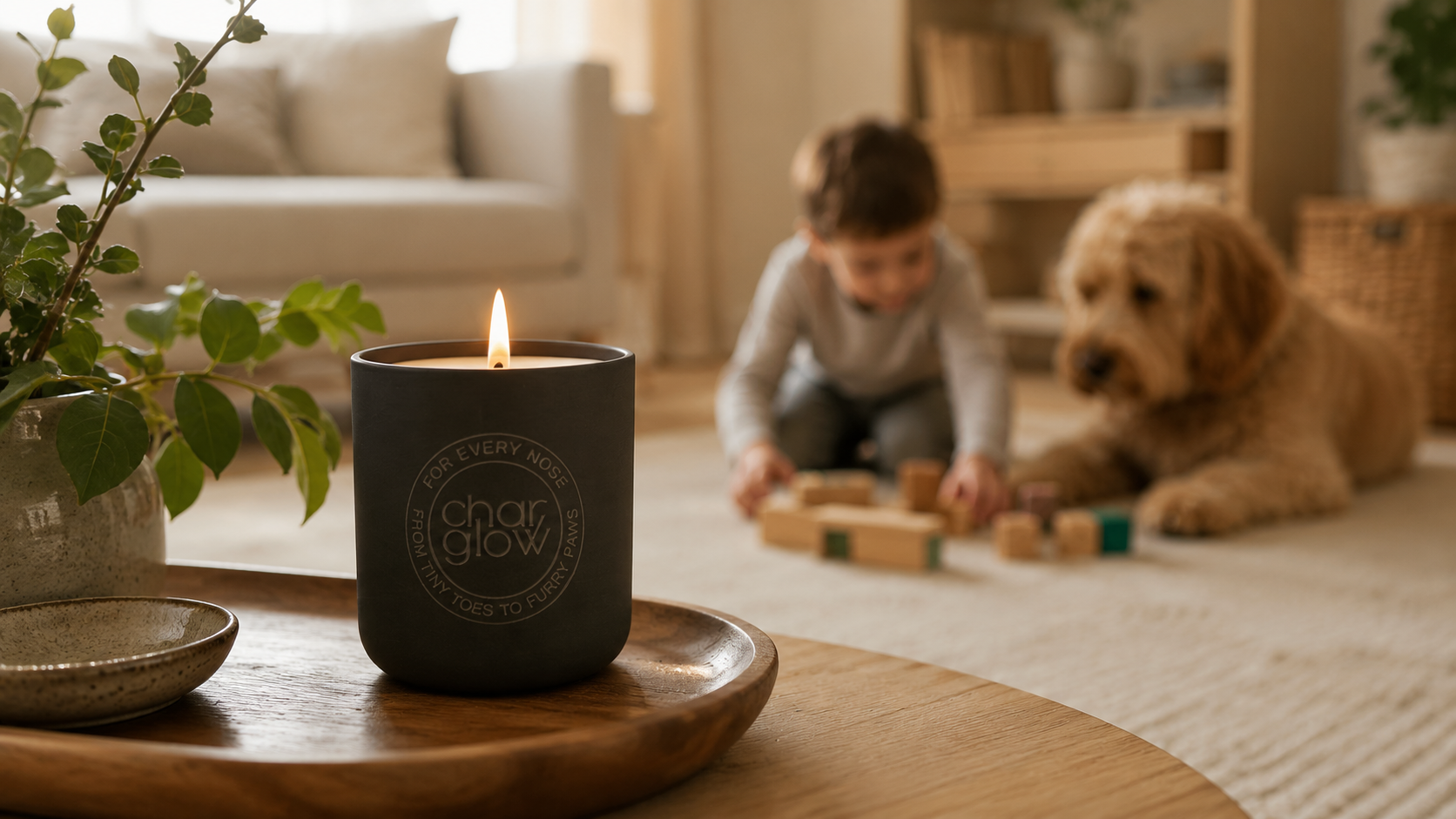
Place the candle on a flat, heat-resistant surface where it cannot easily be reached or disturbed.
Keep candles away from:
- Table and counter edges.
- Curtains, blankets, and upholstered furniture.
- Toys and play areas.
- Pet beds, crates, and feeding stations.
- Wagging tails and curious paws.
- Shelves or surfaces accessible to climbing children.
- Areas where the candle may be bumped during everyday activity.
A stable location reduces the risk of tipping, spills, and accidental contact with the hot vessel.
Always Burn Within Sight
Never leave a burning candle unattended.
Extinguish the candle before:
- Leaving the room.
- Going to sleep.
- Leaving children or animals in the area without supervision.
- Moving the candle to another location.
A candle should never be treated as something that can safely burn in the background while no one is watching.
Keep the Wick Trimmed
Before every burn, trim the wick to approximately ¼ inch.
A properly trimmed wick supports a steadier flame and may help reduce:
- Excessive flickering.
- Mushrooming.
- Soot.
- An unusually large flame.
- Excessive heat.
Allow the candle to cool completely before trimming the wick or removing debris from the wax.
Keep the Candle Away from Drafts
Fans, open windows, air-conditioning vents, and busy walkways can disturb the flame.
A candle burning in a draft may:
- Flicker excessively.
- Burn unevenly.
- Produce more soot.
- Create an unstable flame.
Choose a location with gentle ventilation but without direct airflow across the candle.
Pay Attention to Fragrance Sensitivity
Any fragranced product may bother a sensitive person or animal.
Use candles in a ventilated room and discontinue use if anyone in the household shows signs of irritation or discomfort.
For homes that prefer a softer fragrance experience, CharGlow’s Signature Collection is intentionally lightly scented. The Escape Collection is more fragrance-forward and creates a fuller scent presence.
Neither collection should be described as universally appropriate for every person or animal.
Keep Matches and Candle Tools Out of Reach
Candle safety includes more than the candle itself.
Store these items away from children and pets:
- Matches.
- Lighters.
- Wick trimmers.
- Candle snuffers.
- Melted wax.
- Loose lids.
- Packaging materials.
Small tools and accessories can create their own risks when left within reach.
Let the Candle Cool Before Moving It
Do not move a candle while the wax is melted or the vessel is hot.
After extinguishing the flame:
- Allow the wax to become fully solid.
- Allow the ceramic vessel to cool.
- Confirm the wick remains centered.
- Replace the lid only after the candle is completely cool.
Moving a hot candle can result in spills, burns, or damage to the vessel.
Stop Burning at the Right Time
Discontinue use when approximately ½ inch of wax remains at the bottom of the vessel.
Burning a candle all the way to the base can cause the bottom of the container to become excessively hot.
Follow the complete CharGlow Candle Care instructions for wick trimming, burn duration, cooling, and vessel reuse.
A Safe Candle Routine
A candle can still be part of a warm and inviting home with children or animals.
The key is to focus on:
- Secure placement.
- Active supervision.
- Proper wick care.
- Controlled burn time.
- Ventilation.
- Careful storage.
- Attention to the needs of everyone sharing the space.
Thoughtful candle habits matter more than broad safety claims.